heat exchanger Archives - Page 3 of 4 - UNITED HEAT EXCHANGER

Fin Fan Cooler Manufacturers

Fin Fan Coolers

By | Heat Exchanger | No Comments
Fin Fan Coolers

Fin Fan Coolers

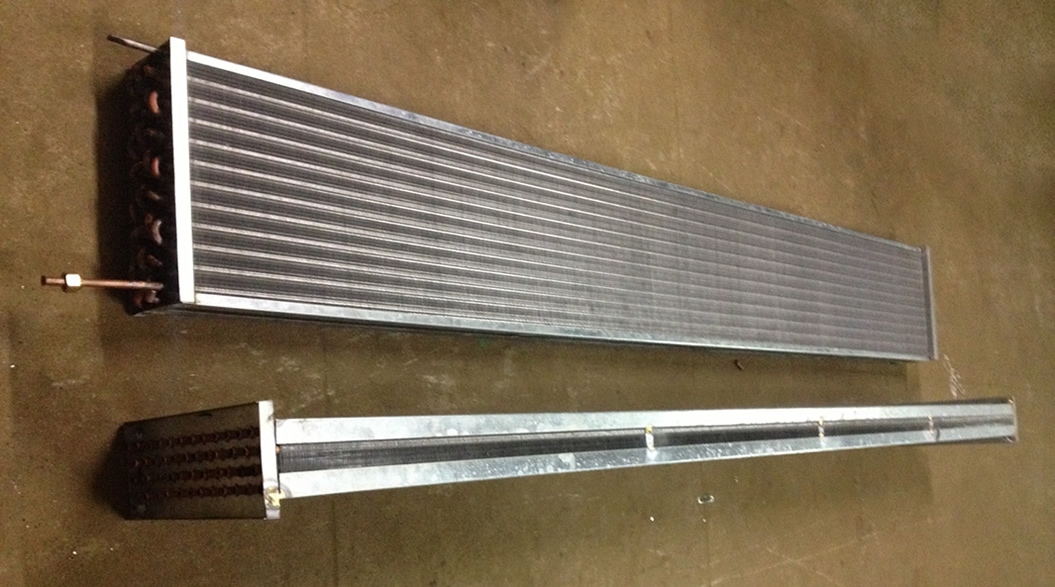
The Air Cooled Heat Exchangers are also known as Fin fan Coolers. Since Fins are used in the Cooler it is called as Fin fan Cooler.

Fin Fan Cooler Manufacturer

Fin Fan Coolers

Specifications :

  • The ambient air is used as the cooling media to cool the main hot fluid which is used in tube side.

Applications :

  • The finned tubes are having more contact surface. All the tubes used in the coolers are finned tubes.

Advantages :

  • This is one of the best closed circuit and water savable cooling system.

Fin Fan Cooling Towers Manufacturer INDIA

Double Pipe Heat Exchanger Manufacturers

Double Pipe Heat Exchanger

By | Heat Exchanger | No Comments
Double Pipe Heat Exchanger Manufacturer

Double Pipe Heat Exchanger

A double pipe heat exchanger, in its simplest form is just one pipe inside another larger pipe. One fluid flows through the inside pipe and the other flows through the annulus between the two pipes. The wall of the inner pipe is the heat transfer surface. The pipes are usually doubled back multiple times as shown in the diagram at the left, in order to make the overall unit more compact.

The term ‘hairpin heat exchanger’ is also used for a heat exchanger of the configuration in the diagram. A hairpin heat exchanger may have only one inside pipe, or it may have multiple inside tubes, but it will always have the doubling back feature shown.


Types of Double Pipe Heat Exchangers :-

1. Counter flow
2. Parallel Flow Heat Exchanger


1. Counter flow:-
The main advantage of a hairpin or double pipe heat exchanger is that it can be operated in a true counter flow pattern, To get More Efficiency, In the mean Time, it will give the highest overall heat transfer coefficient for the double pipe heat exchanger design.


2. Parallel Flow:-
Parallel Flow double pipe heat exchangers are focused to handle high pressures and temperatures applications. Also we can Achieve High Log mean Temperature using this.


3. Double Pipe Heat Exchanger Design:-

Determination of the heat transfer surface area needed for a double pipe heat exchanger design can be done using the basic heat exchanger equation: Q = UA ΔTlm, where:

Q is the rate of heat transfer between the two fluids in the heat exchanger in Btu/hr,

U is the overall heat transfer coefficient in BTU/hr-ft2-oF,Remove term:

A is the heat transfer surface area in ft2, and

ΔTlm is the log mean temperature difference in oF, calculated from the inlet and outlet temperatures of both fluids.

These parameters in the basic heat exchanger equation are discussed in ‘and they are used in an example in ‘ After determination of the required heat transfer surface area, the diameter and length of the inner pipe can be selected and then the diameter of the outer pipe. Finally, the length of the straight sections and the number of bends can be selected.

Specifications :

  • Some heat exchanger manufacturers advertise the availability of finned tubes in a hairpin or double pipe heat exchanger.
  • These would always be longitudinal fins, rather than the more common radial fins used in a crossflow finned tube heat exchanger.

Applications :

  • A primary advantage of a hairpin or double pipe heat exchanger is that it can be operated in a true counterflow pattern, which is the most efficient flow pattern.
  • It will give the highest overall heat transfer coefficient for the double pipe heat exchanger design.

Advantages :

  • Double pipe heat exchangers can handle high pressures and temperatures well.
  • When they are operating in true counterflow, they can operate with a temperature cross.
  • The cold side outlet temperature is higher than the hot side outlet temperature.

Double Pipe Heat Exchanger

Copper Heat Exchanger

By | Heat Exchanger | No Comments

Copper Heat Exchangers Manufacturer INDIA

Copper heat exchangers are more efficient than shell and tube exchangers for low flow rates. Due to their simple construction they are low in price and easy to clean on the shell side. Their thermal efficiency approximates that of a true countercurrent flow type exchanger. Condenserors are used for condensation of vapours and cooling of liquids. Condensers are made by fusing number of parallel coils in a glass shell. Coils are made in different diameters using tubes of different bores.


Copper tubes are artificial to special requirements as to dimensional tolerances, finish and tempers for use in condensers and heat exchangers. These copper heat exchanger tubes are normally supplied in straight length in annealed & half hard temper. The copper tubes shaped by are metal industries not only have the stiff tolerances but also have the most dependable dimensions throughout the tube length. The tube surface is clean both inside and outside with no caustic stains. The copper tubes produced by are metal industries are suitable to transfer heat in a wide variety of operating conditions and to refuse to accept decay for the longest period of time possible under the harshest operating circumstances.


This is important because motors and motor-driven systems account for 43%-46% of all global electricity consumption and 69% of all electricity used by industry. Increasing the mass and cross section of copper in a coil increases the electrical energy efficiency of the motor. Copper motor rotors, a new technology designed for motor applications where energy savings are prime design objectives, are enabling general-purpose induction motors to meet and exceed National Electrical Manufacturers Association (NEMA) premium efficiency standards.


The average co-efficient of heat transfer in coil condenser is considered as :-
Condensation : 200 – 270 Kacl/m2, hr,oC apprx.
Cooling : 100 – 150 Kacl/m2, hr,oC apprx.


Specifications :

  • Copper is mostly used as a metal, but when a higher hardness is required it is combined with other elements to make an alloy 5% of total use such as brass and bronze.

Applications :

  • A small part of copper supply is used in production of compounds for nutritional supplements and fungicides in agriculture. Machining of copper is possible, although it is usually necessary to use an alloy for intricate parts to get good machinability characteristics.
  • The major applications of copper are in electrical wires (60%), roofing and plumbing (20%) and industrial machinery (15%).

Advantages :

  • The electrical properties of copper are exploited in copper wires and devices such as electromagnets.
  • Integrated circuits and printed circuit boards increasingly feature copper in place of aluminium because of its superior electrical conductivity (see Copper interconnect for main article); heat sinks and heat exchangers use copper as a result of its superior heat dissipation capacity to aluminium.
  • Vacuum tubes, cathode ray tubes, and the magnetrons in microwave ovens use copper, as do wave guides for microwave radiation.
  • Copper’s greater conductivity versus other metallic materials enhances the electrical energy efficiency of motors.

Copper Heat Exchanger

Compact Heat Exchangers

By | Heat Exchanger | No Comments

Compact Heat Exchangers Manufacturer INDIA

The purpose of heat exchangers is to transfer heat from one fluid (either gas or liquid) to
another. CHEs have a significantly greater surface area per unit volume than more conventional types of heat exchanger. For the purposes of the ECA Scheme, a CHE is defined as a heat exchanger with a surface to volume ratio of > 200
m2/m3.


These characterized by a high surface area per unit volume, which can result in a higher
efficiency than conventional heat exchangers, in a significantly smaller volume (typically
Compact heat exchangers can achieve efficiencies of over 95% cf. 80% for non-compact heat exchangers).
Compact heat exchangers transfer more energy in a cost-effective manner than other heat exchangers and save more energy when compared to standard technology.


Specifications :

  • To be eligible for inclusion on the Energy Technology Product List, products must meet the eligibility criteria as set out below.

Applications :

  • Investments in CHEs can only qualify for Enhanced Capital Allowances if the specific product is named on the Energy Technology Product List.

Advantages :

Three types of compact heat exchanger are covered by the ECA Scheme. These are:

  • 1. Plate heat exchangers.
  • 2. Plate-fin heat exchangers.
  • 3. CHEs Precision formed surfaces.

Compact Heat Exchangers

Coil Type Heat Exchanger Manufacturers

Coil Type Heat Exchanger

By | Heat Exchanger | No Comments
COIL TYPE HEAT EXCHANGER Manufacturers

COIL TYPE HEAT EXCHANGER

Coil Type Heat Exchanger Manufacturer INDIA

Coil Type Heat Exchanger is nothing but Copper tubes are artificial to special requirements as to dimensional tolerances, finish and tempers for use in condensers and heat exchangers. These copper heat exchanger tubes are normally supplied in straight length in annealed & half hard temper. The copper tubes shaped by are metal industries not only have the stiff tolerances but also have the most dependable dimensions throughout the tube length. The tube surface is clean both inside and outside with no caustic stains. The copper tubes produced by are metal industries are suitable to transfer heat in a wide variety of operating conditions and to refuse to accept decay for the longest period of time possible under the harshest operating circumstances.Coil type exchangers are more efficient than shell and tube exchangers for low flow rates. Due to their simple construction they are low in price and easy to clean on the shell side. Their thermal efficiency approximates that of a true countercurrent flow type exchanger. Condenserors are used for condensation of vapours and cooling of liquids. Condensers are made by fusing number of parallel coils in a glass shell. Coils are made in different diameters using tubes of different bores.


Coil Type Heat Exchanger Manufacturers

Coil Type Heat Exchanger

Specifications :

  • Copper tubes are important because motors and motor-driven systems account for 43%-46% of all global electricity consumption and 69% of all electricity used by industry.
  • Increasing the mass and cross section of copper in a coil increases the electrical energy efficiency of the motor.
  • Copper motor rotors, a new technology designed for motor applications where energy savings are prime design objectives, are enabling general-purpose induction motors to meet and exceed National Electrical Manufacturers Association (NEMA) premium efficiency standards.

Applications :

  • The major applications of copper are in electrical wires (60%), roofing and plumbing (20%) and industrial machinery (15%).
  • Copper is mostly used as a metal, but when a higher hardness is required it is combined with other elements to make an alloy (5% of total use) such as brass and bronze.
  • A small part of copper supply is used in production of compounds for nutritional supplements and fungicides in agriculture.
  • Machining of copper is possible, although it is usually necessary to use an alloy for intricate parts to get good machinability characteristics.

Advantages :

  • The electrical properties of copper are exploited in copper wires and devices such as electromagnets.
  • Integrated circuits and printed circuit boards increasingly feature copper in place of aluminium because of its superior electrical conductivity (see Copper interconnect for main article)
  • Heat sinks and heat exchangers use copper as a result of its superior heat dissipation capacity to aluminium. Vacuum tubes, cathode ray tubes.
  • The magnetrons in microwave ovens use copper, as do wave guides for microwave radiation.
  • Copper’s greater conductivity versus other metallic materials enhances the electrical energy efficiency of motors.

Coil Type Heat Exchanger

Brazed Plate Heat Exchanger Manufacturers

Brazed Plate Heat Exchanger

By | Heat Exchanger | No Comments
Brazed Plate Heat Exchanger Manufacturers

Brazed Plate Heat Exchanger

Brazed Plate Heat Exchangers Manufacturer INDIA

We are the leading manufacturers of Air heat exchangers in India.


Brazed Plate Heat Exchangers represent the most compact, rugged and cost-effective means of transferring heat in many industrial and refrigerant applications. Built from 316 stainless steel with copper brazing materials, they provide exceptional corrosion resistance. The SB-Series features corrugated plates that produce highly turbulent flow in a true counter-current direction.


This results in high efficiency and a very compact heat exchanger design. Due to the smaller size and reduced material content, they can be the most economical heat transfer choice.API Heat Transfer Brazed Plate Heat Exchangers are available for process and refrigeration applications. Made from stainless-steel plates and copper or nickel brazing materials, they are suitable for a wide variety of heat exchanger applications.


Specifications :

  • The brazed plates form two separate channel systems.
  • The two media assume a true countercurrent flow, completely isolated from each other.
  • This channel configuration is designed to produce high turbulence, promoting maximum heat transfer.

Applications :

  • Hydronic heating
  • Domestic hot water heating
  • Radiant heating
  • Snow & ice melting
  • Chilled water cooling
  • Beer & wort chilling
  • Hydraulic oil cooling
  • Outdoor wood furnaces/stoves/boilers and other water to water and liquid to liquid heat transfer applications.

Advantages :

  • Flexibility to change plate arrangement and to add or remove plate
  • Optimized heat recovery
  • Easy maintenance and suitable for CIP, plate pack easily accessible
  • No mixing of product
  • High heat transfer coefficients
  • Compact constructions

Brazed Plate Heat Exchanger

Aluminium Heat Exchanger Manufacturers

Aluminium Heat Exchanger

By | Heat Exchanger | No Comments
Aluminium Heat Exchanger Manufacturers

Aluminium Heat Exchanger

Aluminium Heat Exchangers Manufacturer INDIA

A heat exchanger is a piece of equipment built for efficient heat transfer from one medium to another. The media may be separated by a solid wall, so that they never mix, or they may be in direct contact. They are widely used in space heating, refrigeration, air conditioning, power plants, chemical plants, petrochemical plants, petroleum refineries, natural gas processing, and sewage treatment. The classic example of a heat exchanger is found in an internal combustion engine in which a circulating fluid known as engine coolant flows through radiator coils and air flows past the coils, which cools the coolant and heats the incoming air.


Cryo-tek -100/AL is a blend of virgin (not recycled) propylene glycol and Hercules exclusive Triple Protection additives designed for use in hydronic heating and cooling closed loop piping systems (including PEX and radiant tube heating systems), ice melt and general heating systems where aluminum heat exchangers are installed.

Hercules Triple Protection additives provide outstanding protection against acid corrosion, scale and sedimentation formation in properly maintained systems containing recommended concentrations of cryo-tek Anti-Freeze.


Acid neutralizing agent protects by neutralizing corrosive acids.
Mineral Deposition Preventative eliminates scale formation on critical heat transfer surfaces, piping systems and equipment.


Mineral Sediment Preventative keeps minerals in solution, resisting formation of clusters of mineral salts and preventing particles from precipitating out of solution.


Used at recommended levels, all three agents work together to prevent bio film (slime) build-up.


Cryo-tek -100/AL may be used in systems fabricated with metal, plastics (except CPVC) and rubber piping, fittings, seals, and other parts.


Formulated for the maximum propylene glycol protection directly out of the container.


Certified Performance: Freeze Protection Down to -60°F / -51°C, Pumpable down to -70°F / -57°C, and Burst Protection Down to -100°F / -73°C.


Cryo-tek -100/AL can be diluted with water for less severe conditions.


Specifications :

  • A new generation of very efficient boilers utilizing ALUMINIUM HEAT EXCHANGERS are becoming more popular in today’s marketplace.
  • These new boilers typically heat three times faster than traditional boilers and require a specific, unique blend of anti-freeze specific to protecting against acid corrosion.

Applications :

  • Corrosion inhibitors in all cryo-tek products protect against
  • corrosive build-up within the piping loop and are effective with most metals including steel, aluminum and copper.
  • Cryo-tek solutions have a high specific heat and are efficient at transferring heat.
  • As packaged, cryo-tek is non-flammable, odorless, non-irritating, and compatible with Hercules boiler stop leaks.

Advantages :

  • Aluminium is the most widely used non-ferrous metal.
  • Global production of aluminium in 2005 was 31.9 million tonnes.
  • It exceeded that of any other metal except iron.
  • Forecast for 2013 is 42–45 million tonnes, driven by rising Chinese output.
  • Aluminium is almost always alloyed, which markedly improves its mechanical properties, especially when tempered.
  • the common aluminium foils and beverage cans are alloys.
  • The main alloying agents are copper, zinc, magnesium, manganese, and silicon
  • The levels of these other metals are in the range of a few percent by weight.

Aluminium Heat Exchanger

Air Heat Exchanger Manufacturers

Air Heat Exchanger

By | Heat Exchanger | No Comments
air heater heat exchanger manufacturer

air heater heat exchanger

Air Heat Exchanger Manufacturer INDIA

Air Heat Exchanger Manufactures

Air Heat Exchanger

Water to Air Heat Exchanger are gadgets that several devices and plants use within order to shift heat from one medium to a different. Therefore regularly located, as they are part of a terrific variety of house appliances. Air conditioning units, ovens or outdoors wood central heating boilers all have this revolutionary product as part of their built. Additionally, a great variety of plants and oil refineries make use of high-temperature exchangers within their day-to-day operations.
The top-of-the-line known application for Water to Air heat exchangers is its use in household appliances.

Specifications :

  • The majority of Water to Air heat exchangers are extremely valuable the different parts of stoves, family fridges and air conditioning systems.
  • They are used in radiant heating systems and solar heating systems.
  • They are efficient power savers and, with proper installation

Applications :

  • Air conditioning equipment usually reduces the humidity of the air processed by the system.
  • The relatively cold below the dew point evaporator coil condenses water vapor from the processed air, much as a cold drink will condense water on the outside of a glass.
  • The water is drained, removing water vapor from the cooled space and thereby lowering its relative humidity.

Advantages :

  • Some air conditioning units dry the air without cooling it.
  • These work like a normal air conditioner, except that a heat exchanger is placed between the intake and exhaust.
  • In combination with convection fans, they achieve a similar level of coolness as an air cooler in humid tropical climates, but only consume about one-third the energy.

Air Heat Exchanger

Air Cooled Condenser Manufacturers

Air Cooled Condenser

By | Heat Exchanger | No Comments

Air Cooled Condenser :

AIR COOLED CONDENSER MANUFACTURER

AIR COOLED CONDENSER

Air Cooled Condenser Manufacturers

Air Cooled Condenser

We are United Heat Exchanger providing solution for Air condensation system for all types of Thermal Power plants.In systems involving heat transfer, a condenser ( Air Cooled Condenser )is a device or unit used to condense a substance from its gaseous to its liquid state, typically by cooling it. In so doing, the latent heat is given up by the substance, and will transfer to the condenser coolant. Condensers are typically heat exchangers which have various designs and come in many sizes ranging from rather small (hand-held) to very large industrial-scale units used in plant processes. For example, a refrigerator uses a condenser to get rid of heat extracted from the interior of the unit to the outside air. Condensers are used in air conditioning, industrial chemical processes such as distillation, steam power plants and other heat-exchange systems. Use of cooling water or surrounding air as the coolant is common in many condensers.


Specifications :

  • A condenser unit used in central air conditioning systems typically has a heat exchanger section to cool down and condense incoming refrigerant vapor into liquid, a compressor to raise the pressure of the refrigerant and move it along,
  • A fan for blowing outside air through the heat exchanger section to cool the refrigerant inside.

Applications :

  • A typical configuration of such a condenser unit is as follows: The heat exchanger section wraps around the sides of the unit with the compressor inside.
  • In this heat exchanger section, the refrigerant goes through multiple tube passes, which are surrounded by heat transfer fins through which cooling air can move from outside to inside the unit.

Advantages :

  • There is a motorized fan inside the condenser unit near the top, which is covered by some grating to keep any objects from accidentally falling inside on the fan.
  • The fan is used to blow the outside cooling air in through the heat exchange section at the sides and out the top through the grating.
  • These condenser units are located on the outside of the building they are trying to cool, with tubing between the unit and building, one for vapor refrigerant entering and another for liquid refrigerant leaving the unit.
  • Of course, an electric power supply is needed for the compressor and fan inside the unit.
Air cooled heat exchanger Manufacturers

Air cooled Heat Exchanger

By | Heat Exchanger | No Comments
air cooled heat exchanger

air cooled heat exchanger

Air-cooled heat exchangers are generally used where a process system generates heat which must be removed, but for which there is no local use. A good example is the radiator in your car. The engine components must be cooled to keep them from overheating due to friction and the combustion process. The excess heat is carried away by the water/glycol coolant mixture. A small amount of the excess heat may be used by the car’s radiator to heat the interior. Most of the heat must be dissipated somehow. One of the simplest ways is to use the ambient air. Air-cooled heat exchangers (often simply called air-coolers) do not require any cooling water from a cooling tower. They are usually used when the outlet temperature is more than about 20 deg. F above the maximum expected ambient air temperature. They can be used with closer approach temperatures, but often become expensive compared to a combination of a cooling tower and a water-cooled exchanger.


Air Cooled Heat Exchanger Manufacturers

Air Cooled Heat Exchanger


Typically, an air-cooled exchanger for process use consists of a finned-tube bundle with rectangular box headers on both ends of the tubes. Cooling air is provided by one or more fans. Usually, the air blows upwards through a horizontal tube bundle. The fans can be either forced or induced draft, depending on whether the air is pushed or pulled through the tube bundle. The space between the fan(s) and the tube bundle is enclosed by a plenum chamber which directs the air. The whole assembly is usually mounted on legs or a piperack.


The fans are usually driven be electric motors through some type of speed reducer. The speed reducers are usually either V-belts, HTD drives, or right angle gears. The fan drive assembly is supported by a steel mechanical drive support system. They usually include a vibration switch on each fan to automatically shut down a fan which has become imbalanced for some reason


The air-cooled heat exchangers are mostly used when the plant location and the ambient conditions do not allow an easy and economic use of other cooling systems.


Specifications :

  • Lower environmental impact than shell and tube heat exchangers thanks to the elimination of an auxiliary water supply

Applications :

  • Reduction of maintenance costs
  • No problem arising from thermal and chemical pollution of cooling fluids

Advantages :

  • Easy installation by bolted assembly
  • Flexibility for any plant location and plot plan arrangement(installation over other units)

Air cooled heat exchanger